
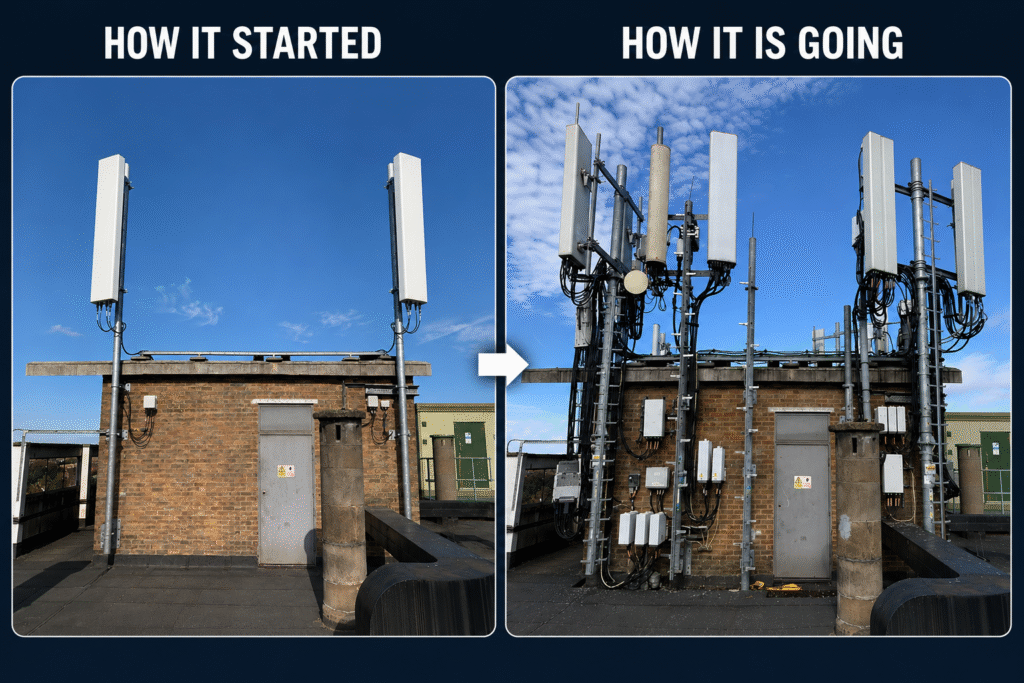
Telecom installations are often treated as minor additions to existing structures, but they can introduce significant loads that were not considered in the original design. Without proper assessment, this can lead to overloading and potential structural failure.
One of the most common issues is the assumption that rooftops and supporting elements have sufficient capacity to accommodate additional equipment. In practice, antennas, steel frames, cable trays, and ancillary components can collectively impose substantial loads. Over time, multiple installations on the same structure can further increase this demand, exceeding the original design limits.
In many cases, the issue is not the weight of a single installation, but the cumulative effect of several modifications carried out without a full structural review. This can result in overstressing of beams, slabs, or supporting members, particularly in older buildings where design documentation may be limited.
Overloading can be avoided through proper structural assessment prior to installation. This includes verifying the load-carrying capacity of the existing structure, reviewing available drawings, and adopting conservative assumptions where necessary. Consideration should also be given to future upgrades, ensuring that the structure can accommodate potential increases in equipment loading.
By addressing load capacity at the early stage of design, the risk of overstressing and long-term structural issues can be significantly reduced.
At KA Engineering Group, we apply practical engineering judgement and detailed structural assessments to ensure that telecom installations are safely integrated into existing structures while maintaining compliance with recognised design standards. Contact our expert team at: info@ka-engroup.com to learn more and discuss how we can best serve your needs.